You can contact us at +27 76 985 0956 | info@chapter96bookz.co.za

Contact Us
Our Shop
Contact us for all your questions and opinions


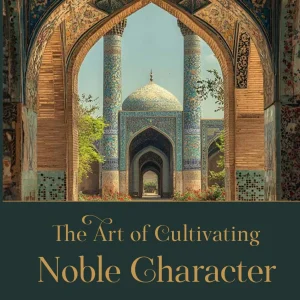
This groundbreaking translation revives Imam Raghib al-Isfahani's seminal ethical treatise, integrating Qur'anic principles with philosophical depth. Isfahani's timeless exploration of moral virtue, the soul and spiritual refinement is characterized by his unique weaving of Qur'anic verses and prophetic traditions into ethical discourse.
• Publisher White Thread Press & Turath Publications
• Pages 196
• Binding Softback
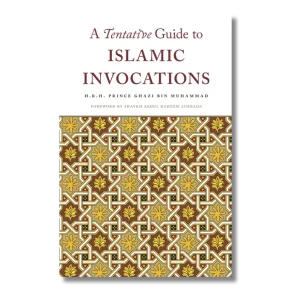
The ‘A Tentative Guide to Islamic Invocations’ is a personal selection of invocations, all of which claim to be from the Prophet Muhammad (SAW) or from his immediate Companions. In other words, everything in this collection is a transmitted (ma’thur) invocation. Apart from a single narration (which is traceable to the Tabi‘ al-Tabi‘in Imam Sufyan al-Thawri [97–161 ah/716–778 ce] and who arguably would not have related it without a now-lost chain of transmission to the Prophet (SAW)), there are no non-transmitted invocations here from any of the great figures of Islamic history and spirituality after the Companions of the Prophet (SAW).
• Pages 196
• Binding Softback
The ‘A Tentative Guide to Islamic Invocations’ is a personal selection of invocations, all of which claim to be from the Prophet Muhammad (SAW) or from his immediate Companions. In other words, everything in this collection is a transmitted (ma’thur) invocation. Apart from a single narration (which is traceable to the Tabi‘ al-Tabi‘in Imam Sufyan al-Thawri [97–161 ah/716–778 ce] and who arguably would not have related it without a now-lost chain of transmission to the Prophet (SAW)), there are no non-transmitted invocations here from any of the great figures of Islamic history and spirituality after the Companions of the Prophet (SAW).

• Publisher Turath Publishing
• Pages 389
• Binding Paperback
An Abridged Translation of Mawardis Adab al-Dunya wa al-Din
• Pages 389
• Binding Paperback
An Abridged Translation of Mawardis Adab al-Dunya wa al-Din

“A ‘self-help’ book for Muslims, which seeks both to inspire Muslim women, but also to educate those outside the faith” – Dr Myriam Francois
Since her conversion to Islam in 2002 Mathilde Loujayne has crossed paths with women from all walks of life on a common spiritual journey to discover Islam from a feminine perspective.
Fuelled by a desire to find the right words to explain to her mother her choice to embrace Islam, this guide was born.
Through Mathilde Loujayne's personal experiences - grief, high school, moving abroad, work, marriage, and motherhood - she addressses women's common concerns as they take the big, little steps towards finding a balanced lifestyle and a glowing heart in Islam.

- Publisher: Turath Publicationa
- ISBN: 9781906949433
- Pages: 105
- Binding: Paperback

R280,00
Fiqh of Social Media: Timeless Islamic Principles for Navigating the Digital Age – Omar Usman
Social media and digital technologies have changed our lives and there is no indication that things will slow down. As Muslims, we believe that Islam contains the most perfect guidance for all of mankind to follow. How do we implement that timeless advice in our unprecedented times? That is the focus of the Fiqh of Social Media.
"I am grateful and appreciative of my friend, Omar Usman, for exhausting available resources; Islamic, psychological, secular, and business, to develop the work you see before you. We have had long discussions pertaining to many of the topics covered in this book. I am confident that you will find this book to be beneficial, and I pray that it inspires more contributions on this topic." -Shaykh AbdulNasir Jangda, Qalam Institute
“With the time we spend on social media, being mindful of how we use it is crucial. This is a wonderful resource based in prophetic guidance on how to practically use social media in wise and beneficial ways.” -Dr. Omar Suleiman, Yaqeen Institute
“Reading Fiqh of Social Media is like sitting with your best friend from Sunday school and having an intellectual & spiritual conversation about the impact of social media on your life. Omar distills years of research, experience, and thought leadership in an easily digestible book that you can enjoy with a good cup of coffee (and your phone off!)” -Mohammed Faris, The Productive Muslim Company
“The Prophet (s) said, “Whoever believes in Allah and the Last Day should say something good or keep silent.” The ability to control our tongues, how we communicate with others, is an expression of our faith. Communication has evolved and changed so much that one of the primary ways many of us communicate with others is through social media; hashtags and 280 characters. This is a long-awaited work from my good friend and Hajj companion Omar Usman who has been writing, tweeting, speaking, and teaching about the Fiqh of Social Media for years. This is a valuable work providing guidance on how to use and benefit from social media in a way that conforms to our principles and values.” -Shaykh Furhan Zubairi, Institute of Knowledge
“Ulama of the past have written on the adaab of speech and social interaction. Connecting those guidelines with the modern world of social media has been the need of our time. May Allah reward Omar for taking this task on!” -Mufti Hussain Kamani

Book Author: Shaykh Abd Allah al-Ghumari
Translated By: Shaykh Abdurragmaan Khan
Publisher: Dar-al Turath al-Islami
ISBN: 9780639755380
Pages: 93
The Prophet Muhammad s said: “There are forty traits, the highest of which is lending a doe for her milk, for which Allah will cause the one who acts upon any of them, desiring its reward and its promise, to be admitted into Paradise.” Shaykh Abd Allah al-Ghumari conducted ground-breaking research into this hadith which yielded a detailed treatise on the subject. Mawlana Abdurragmaan Khan has performed a great service to the Muslim ummah by translating this treatise into English. He has done so in the course of teaching Shaykh al-Ghumari’s book to his students. The current book represents the fruit of Shaykh Abdurragmaan’s labours and constitutes a significant contribution to Islamic sacred knowledge. It is essential reading for all those seeking to draw closer to Allah and His Beloved Messengers. May Allah bless and reward Shaykh Abdurragmaan and grant him the grace to continue to benefit the Muslim ummah.

•Publisher: Imam Ghazali Publishing
•ISBN: 978-1-952306-38-9
•Pages: 180
•Binding: Paperback
Futuwwah and Raising Males into Sacred Manhood concisely discusses the principles within futuwwah, or spiritual chivalry, that young men should strive to embody and should inculcate into our communities. While the virtues discusses in this text are not all exclusively related to young males becoming men, this book is tailored towards males, and the specific issues faced by males as they strive to grow into the path of manhood. Just as young women need their own spaces to learn from women how to become honorable sisters, young men require their own special places to instill in them the virtues of upright brothers. The Islamic tradition calls for a revival of organized training relating to spiritual chivalry and sacred manhood - this is the task of the hour. There are beautiful and majestic qualities embodied by the Prophet s that he passed down to his family members and pious Companions. Those upright men were methodically raised up: they undertook rites of passage, and manly responsibilities which were placed upon them with expectations that they would be executed with excellence. This book begins by establishing the linguistic and operational definitions of the Arabic word futuwwah, translated here as "spiritual chivalry." The text then discusses the essential virtues for developing healthy manhood, in a specific order of their priority in teaching. The Qur'anic verses, Prophetic narrations, and sayings of pious Companions and scholars on the subject of futuwwah are related with sound meaning, accompanied by meticulous citations in footnotes and endnotes..
•ISBN: 978-1-952306-38-9
•Pages: 180
•Binding: Paperback
Futuwwah and Raising Males into Sacred Manhood concisely discusses the principles within futuwwah, or spiritual chivalry, that young men should strive to embody and should inculcate into our communities. While the virtues discusses in this text are not all exclusively related to young males becoming men, this book is tailored towards males, and the specific issues faced by males as they strive to grow into the path of manhood. Just as young women need their own spaces to learn from women how to become honorable sisters, young men require their own special places to instill in them the virtues of upright brothers. The Islamic tradition calls for a revival of organized training relating to spiritual chivalry and sacred manhood - this is the task of the hour. There are beautiful and majestic qualities embodied by the Prophet s that he passed down to his family members and pious Companions. Those upright men were methodically raised up: they undertook rites of passage, and manly responsibilities which were placed upon them with expectations that they would be executed with excellence. This book begins by establishing the linguistic and operational definitions of the Arabic word futuwwah, translated here as "spiritual chivalry." The text then discusses the essential virtues for developing healthy manhood, in a specific order of their priority in teaching. The Qur'anic verses, Prophetic narrations, and sayings of pious Companions and scholars on the subject of futuwwah are related with sound meaning, accompanied by meticulous citations in footnotes and endnotes..

Title: Inward sin
Paperback - 102 pages
By - Imam Muḥammad Saʿīd Ramaḍān al-Būṭī
Translated by - Mahdi Lock
ISBN - 978-981-18-2877-5
Selling price : R195
The second volume of Imam al-Buti's pinnacle papers. Most Muslims today are turning their attention towards analyzing Islam and trying to present the true state of the Muslims, but they only look at outward actions and statements. These deeds and statements are nothing but the upper floors of Islam’s building; they cannot be strengthened nor consolidated unless they are relying on that humble, hidden part of the building known as the foundations.
These foundations are established in the heart, so how can the foundations of Islam’s building be established therein? How can a connection be made between the foundations of this building and its upper floors, such that the Muslims can guarantee that it will not be blown away by the wind or rocked by a storm, and that it will not be inundated by the forces of tyranny and base desires? The mission of this book is to answer these questions and reveal the ways to make this connection between one’s Islamic life inside the heart and one’s Islamic life as manifested via one’s limbs and organs.
Abḥāth fil-Qimmah (‘Pinnacle Papers’) comprises ten books by the Imam, each of which covers an important topic in Islamic thought. The great scholar deals with several problematic issues that have been raised in recent times in a brilliant, fluent fashion

• Publisher Claritas Books
• ISBN 9780953758272
•Pages 120
• Binding Softcover
Written by one of the outstanding scholars of the 20th Century, Islamic Manners is a vital book that exemplifies the character and personality of every Muslim. Shaykh Abdul Fattah Abu Ghudda (1917-1997) was a leading scholar in the field of hadith. This book discusses essential adab (manners) and covers the following areas: Importance of Appearance Entering and Leaving a House The Manners of Visiting The Manners of Conversation Social Manners Communicating with Non-Muslims The Manners of Eating & Drinking Weddings Visiting a Sick Person Condolences
• ISBN 9780953758272
•Pages 120
• Binding Softcover
Written by one of the outstanding scholars of the 20th Century, Islamic Manners is a vital book that exemplifies the character and personality of every Muslim. Shaykh Abdul Fattah Abu Ghudda (1917-1997) was a leading scholar in the field of hadith. This book discusses essential adab (manners) and covers the following areas: Importance of Appearance Entering and Leaving a House The Manners of Visiting The Manners of Conversation Social Manners Communicating with Non-Muslims The Manners of Eating & Drinking Weddings Visiting a Sick Person Condolences

Authored by Habib Umar bin Hafiz; Foreword by Shaykh Abdurragmaan Khan; Translation by Abdullah Salih
In the age that we live in, our days have become our nights, and our nights have become our days wherein we are continually focusing on matters of this temporary life and turning a blind eye to that which matters, such as the teachings of the best of creation, the one who uttered in a supplication: “O Allah, my Nation, my Nation!”, the Prophet Muhammad ﷺ.
This compilation is unique in that each form of prayer highlights the connection between the Messenger ﷺ and the Names and Qualities of Allah ﷻ. In addition, each form includes a unique supplication for the one reciting it. The reciter of these prayers thus finds himself engaging in the remembrance of Allah ﷻ by calling Him through His Most Sublime Names, and asking Him to send prayers and increase the honour and rank of the Messenger ﷺ. By doing this, he obtains the virtues and reward of sending prayers upon the Prophet, and also supplicates to Allah, asking Him such amazing things that we are generally unable to think of when asking of Him.
The author, Ḥabīb ʿUmar bin Ḥafīẓ, is a descendant of the Prophet Muhammad. ﷺ, and one of the great luminaries of our time. This salawat collection has been made available to English speakers for whom we ask Allah ﷻ to make it a means to attain proximity, in this life and the Hereafter, to Him ﷻ and the Prophet Muhammad ﷺ.
Praise for "Prayers Upon the Beloved ﷺ"
"Amazing book. The prayers are beautiful and the book is insipirational. I would highly recommed it, the prayers it contains in praise of The Beloved (peace be upon him) bring comfort to the heart." – Fariha Baig
"With each page a beautifully crafted, lovingly presented prayer upon the Prophet Muhammad ﷺ is offered for the reader's benefit and internalization. Such a unique collection of "Salawat" that will fill any home with love, light, and true joy. What is more, this amazing collection of prayers has been authored by a true descendant, inheritor, and lover of the Messenger ﷺ, amplifying its beauty and substance to the degree that each reading generates new insights and benefits even though the content may be well-rehearsed. Many thanks to all who brought this project to fruition." – Yasir Abunamous

•Publisher: Kube Publishing
•ISBN: 9781847741868
•Pages: 114
•Binding: Softcover
We live in a time of complexity and uncertainty within modern life. Whilst the overuse of technology and social media has reduced human interaction in families and neighbourhoods, we have also seen an upsurge of empathy and compassion for fellow human beings during times of difficulty and crises. Positive parenting is about raising a child as a better human being and a better citizen. Our parental obligation is to help children grow into mature and confident adults with a positive character and good social and life skills. Preparing for Life is a reminder to, particularly, Muslim parents about their unique and entrusted role in preparing their children for life with universal human and Islamic values.

Habib Sa’d al-‘Aydarus was a descendant of the Prophet Muḥammadﷺ and a Yemeni scholar and teacher. In this book, he emphasises the importance of following the sunnah of the Prophet, and brings to life many Prophetic practices that Muslims have allowed to fall by the wayside in recent times.

- Publisher: Sunni Publications
- Translator: Abdul Aziz Suraqah
- ISBN: 9789079294206
- Pages: 240
- Binding: Paperback
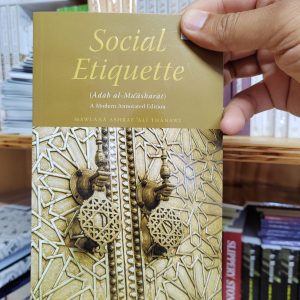
•Publisher: Turath Publishing •ISBN: 9781906949549 •Pages: 50 •Binding: Softcover Social Etiquette (Adab al-Mu’asharat) by the erudite sub-continent scholar, Mawlana Ashraf Ali Thanawi (may Allah be pleased with him) is a brief treatise on on nurturing and perfecting our social conduct. The esteemed author presents anecdotes and practical examples from personal experience, critiquing scenarios and interactions that are often overlooked and seemingly harmless but contradict the spirit of Islam. Whilst this publication is an easy read, it calls for practical expression; to uplift the Islamic requirements in the domain of social life and interactions, to develop healthy communities and foster peace, harmony, love and cohesion.In order to make this translation accessible to the many millions of Muslims living in Western countries, examples (not in the original work) have been added in the footnotes discussing contemporary contexts relevant to our current times and places.
