You can contact us at +27 76 985 0956 | info@chapter96bookz.co.za
Contact Us
Our Shop
Contact us for all your questions and opinions
• Publisher The Islamic Texts Society
• ISBN 978-0946621835
•Pages 278
• Binding Softcover
The essays presented in The History and Philosophy of Islamic Science discuss the principles behind the different sciences cultivated in the Islamic world from the third century of the Islamic era onwards and the place of science in relation to other branches of Islamic learning. In defining what Islamic science means, Professor Osman Bakar shows how these sciences are organically related to the fundamental teachings of Islam. Covering all the natural and mathematical sciences, The History and Philosophy of Islamic Science illustrates what Islamic science shares with modern science. Professor Osman Bakar also highlights where the Islamic approach to science differs from the secular, modern approach.
• ISBN 978-0946621835
•Pages 278
• Binding Softcover
The essays presented in The History and Philosophy of Islamic Science discuss the principles behind the different sciences cultivated in the Islamic world from the third century of the Islamic era onwards and the place of science in relation to other branches of Islamic learning. In defining what Islamic science means, Professor Osman Bakar shows how these sciences are organically related to the fundamental teachings of Islam. Covering all the natural and mathematical sciences, The History and Philosophy of Islamic Science illustrates what Islamic science shares with modern science. Professor Osman Bakar also highlights where the Islamic approach to science differs from the secular, modern approach.
Holy Quran with English translation and colour coded tajweed rules
850 pages
Publisher: Hafiz Academy and Qur’an Literacy Trust
ISBN: 978-0-6399546-2-2
Arabic Quran with Colour coded Tajweed rules
Published by Hafiz Academy and Literary Trust
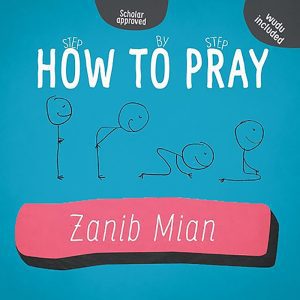
Scholar Approved
A delightful, easy step by step guide for children (or even new Muslims) on how to perform the Islamic Prayer (salaah). A step by step guide for how to make ablution (wudu) is also included. Zanib Mian's easy to understand explanations, make this book another must-have for Muslim Children.
Includes:
- How to make wudu
-What makes wudu ‘pop’
- Salah units and time
- Dress code
- Qibla explanation
- Purity
- how to pray
"A novel and easy approach to learning wudu and prayer. Very practical and well illusreated. Imaginative and simple." - Dr Musharraf Hussain Al-Azhari OBE
•Publisher: Muslim Childrens Books
•ISBN: 978-0995540668
•Pages: 32
•Binding: Softcover
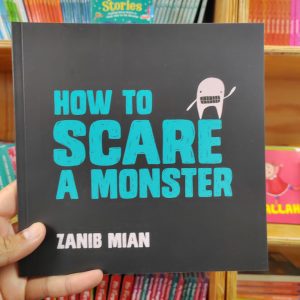
There's only one way to scare a monster...'
A book about calling on Allah, for any child who has ever been scared of anything. The words Audhoobillah are introduced, by Zanib Mian, in a fun, powerful and effective way.
Meet Hurayrah, a cat from the city of the Prophet Muhammad, Madinah, as he shows off his snake-catching skills.
In a bustling oasis called Madinah a small tabby cat, Hurayrah, has lost his friend. The lonely Hurayrah sets out to find him and looks over the bazaar and on top of the mosque.
After searching high and low Hurayrah waits in the mosque, beside a resting man. But with the appearance of a snake, Hurayrah must save the man in peril.
Farah Morley has lectured to diverse audiences, including the BBC, the internationally renowned Beyond the Border festival, the Quest Foundation, and the UK government. She has written and illustrated one other children's book, The Spider and the Doves.
•Publisher: Plan n Learn
•ISBN: 9780620559577
•Pages: 43
•Binding: Softcover
I Am a Muslim Colouring and Activity Book
Series of 5 books introducing the basic concepts and terms in everyday life for Muslim children.
This is one of the I Can Series of books that introduces and illustrates some basic yet important concepts and terms for young Muslim children. These are explained with reference to their everyday life and in the settings with which children are familiar. In simple, easy-to-understand language the series presents Islam as a living reality to be experienced in daily life. It answers many questions about Islam as faith which arise in the young, curious minds.
For ages 3-5 years and the young at heart.
I Can Make Du'a Anywhere! teaches us that in our everyday lives, we should always turn to Allah, seeking His help and thanking Him for all the things He gives us. Praying to Him makes our lives more meaningful and satisfying.
I Can Pray Anywhere! introduces the concept and practice of Prayer in Islam.
This is one of the I Can Series of books that introduces and illustrates some basic yet important concepts and terms for young Muslim children. These are explained with reference to their everyday life and in the settings with which children are familiar. In simple, easy-to-understand language the series presents Islam as a living reality to be experienced in daily life. It answers many questions about Islam as faith which arise in the young, curious minds.
For ages 3-5 years and the young at heart.
How do we pray to Allah? As we go about our busy lives, we pray to Him at home, in the mosque, in the park, on the train or the bus, and everywhere else we can go—even on the moon!
I Can Read The Quran Anywhere! focuses on the importance of studying the Quran in Islam.
This is one of the I Can Series of five books that introduces and illustrates some basic yet important concepts and terms for young Muslim children. These are explained with reference to their everyday life and in the settings with which children are familiar. In simple, easy-to-understand language the series presents Islam as a living reality to be experienced in daily life. It answers many questions about Islam as faith which arise in the young, curious minds.
For ages 3-5 years and the young at heart.
How do we learn to love the Koran, the Book of Allah? By keeping it with us and learning and reading it whenever and wherever we can.
I Can Say Bismillah Anywhere! instructs us that we should remember Allah all the time, no matter what we do.
This is one of the I Can Series of books that introduces and illustrates some basic yet important concepts and terms for young Muslim children. These are explained with reference to their everyday life and in the settings with which children are familiar. In simple, easy-to-understand language the series presents Islam as a living reality to be experienced in daily life. It answers many questions about Islam as faith which arise in the young, curious minds.
For ages 3-5 years and the young at heart.
How do we learn to remember Allah when we start to do something? We say "bismillah" when we wake up, wash, dress, play, or eat to remember our Creator and thank him.
I Can Wear Hijab Anywhere! explains the Hijab.
This is one of the I Can Series of books that introduces and illustrates some basic yet important concepts and terms for young Muslim children. These are explained with reference to their everyday life and in the settings with which children are familiar. In simple, easy-to-understand language the series presents Islam as a living reality to be experienced in daily life. It answers many questions about Islam as faith which arise in the young, curious minds.
For ages 3-5 years and the young at heart.
Wearing hijab, which Islam preaches for girls and women, is not some obstruction, preventing them from leading life in a natural way. It is part of an active and happy life—with family and friends, whether at school, home, or out and about in the great wide world.
Find out what alhamdulillah means and when to say it. A new series to help children understand common Islamic terms.
Muslims say alhamdulillah many times in a day. Alhamdulillah means 'praise be to God' in Arabic.
Nabil and Noura learn to say alhamdulillah after finishing something, and after sneezing in this simple and attractive little book. Will they remember to say alhamdulillah, or will they forget? The second title in the I Say series that will also include: I Say Bismillah, I Say As-salamu 'alaykum, and I Say Mashallah.
Find out what as-salamu 'alaykum means and when to say it. A new series to help children understand common Islamic terms.
Nabil and Noura are going to the park. Along the way Nabil greets the gardener and park ranger. Now Noura wants to say, ‘AS-SALAMU ‘ALAYKUM!’ Who, or what, will she salam?
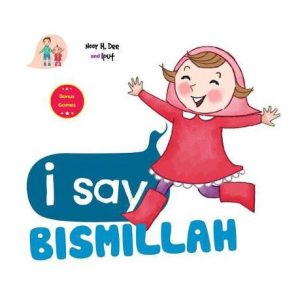
Find out what Bismillah means and when to say it. A new series to help children understand common Islamic terms.
Muslims should say Bismillah many times in a day. “Bismillah” means in the name of God in Arabic.
Nabil and Noura’s mum has just made some cupcakes. Will they remember to say Bismillah, or will the temptation be too much? The first title in the I Say series that will also include: I Say Alhamdulillah, I Say As-salamu‘alaykum, and I Say Mashallah.