You can contact us at +27 76 985 0956 | info@chapter96bookz.co.za

Contact Us
Our Shop
Contact us for all your questions and opinions


Binding: Paperback
Pages: 336
Genre: History
Publisher: Profile
The twentieth century for Palestine and the Palestinians has been a century of denial: denial of statehood, denial of nationhood and denial of history. The Hundred Years War on Palestine is Rashid Khalidi's powerful response. Drawing on his family archives, he reclaims the fundamental right of any people: to narrate their history on their own terms.
Beginning in the final days of the Ottoman Empire, Khalidi reveals nascent Palestinian nationalism and the broad recognition by the early Zionists of the colonial nature of their project. These ideas and their echoes defend Nakba - the Palestinian term for the establishment of the state of Israel - the cession of the West Bank and Gaza to Jordan and Egypt, the Six Day War and the occupation. Moving through these critical moments, Khalidi interweaves the voices of journalists, poets and resistance leaders with his own accounts as a child of a UN official and a resident of Beirut during the 1982 seige. The result is a profoundly moving account of a hundred-year-long war of occupation, dispossession and colonialisation.
In 1899, Yusuf Diya al-Khalidi, mayor of Jerusalem, alarmed by the Zionist call to create a Jewish national home in Palestine, wrote a letter aimed at Theodore Herzl: the country had an indigenous people who would not easily accept their own displacement. He warned of the perils ahead, ending his note, “in the name of God, let Palestine be left alone.” Thus Rashid Khalidi, al-Khalidi’s great-great-nephew, begins this sweeping history, the first general account of the conflict told from an explicitly Palestinian perspective.
Drawing on a wealth of untapped archival materials and the reports of generations of family members―mayors, judges, scholars, diplomats, and journalists―The Hundred Years' War on Palestine upends accepted interpretations of the conflict, which tend, at best, to describe a tragic clash between two peoples with claims to the same territory. Instead, Khalidi traces a hundred years of colonial war on the Palestinians, waged first by the Zionist movement and then Israel, but backed by Britain and the United States, the great powers of the age. He highlights the key episodes in this colonial campaign, from the 1917 Balfour Declaration to the destruction of Palestine in 1948, from Israel’s 1982 invasion of Lebanon to the endless and futile peace process.
Original, authoritative, and important, The Hundred Years' War on Palestine is not a chronicle of victimization, nor does it whitewash the mistakes of Palestinian leaders or deny the emergence of national movements on both sides. In reevaluating the forces arrayed against the Palestinians, it offers an illuminating new view of a conflict that continues to this day.

• Publisher Goodword Books
• Pages 360
• Binding paperback
365 Days with the Prophet Muhammad is a unique storybook, which takes children on a fun-filled, day-by-day adventure throughout the life and times of the Prophet Muhammad. It provides a lively and chronological account of the Prophet as a person, whose life and teachings are loved, cherished and respected by people all over the world. Every day, children will find in it a new story enshrining the wisdom of the Prophet Muhammad, which they can apply in their daily lives. Children will love the colourful illustrations and captivating stories, charmingly told in simple language.

• Publisher DBC
• Pages 207
• Binding Paperback
thoughts, reminders and advice in the form of quotes from a Muslima to all her sisters across the world. The book is divided into four fundamental themes – haya, nafs, sabr and obedience. The aim of this work is to help you deal with the major and minor issues in your life, as well as guide you to change your mindset into a positive perspective when facing calamities. Along the way, you will also gain an overall understanding of the Islamic principles in how to understand your worth as a Muslim woman in a Western society, how to deal with your nafs, how to maintain sabr in times of hardship and finally how to be obedient to your Lord and parents. By the will of Allah, this book will help you re-evaluate the meaning of your life and assist you to see the light within the darkness.
• Pages 207
• Binding Paperback
thoughts, reminders and advice in the form of quotes from a Muslima to all her sisters across the world. The book is divided into four fundamental themes – haya, nafs, sabr and obedience. The aim of this work is to help you deal with the major and minor issues in your life, as well as guide you to change your mindset into a positive perspective when facing calamities. Along the way, you will also gain an overall understanding of the Islamic principles in how to understand your worth as a Muslim woman in a Western society, how to deal with your nafs, how to maintain sabr in times of hardship and finally how to be obedient to your Lord and parents. By the will of Allah, this book will help you re-evaluate the meaning of your life and assist you to see the light within the darkness.

• Publisher Turath Publishing
• Pages 398
• Binding Softback
A Travellers Guide to Historical Landmarks in the Noble city
• Pages 398
• Binding Softback
A Travellers Guide to Historical Landmarks in the Noble city
• Publisher White Thread Press & Turath Publications
• Pages 196
• Binding Softback
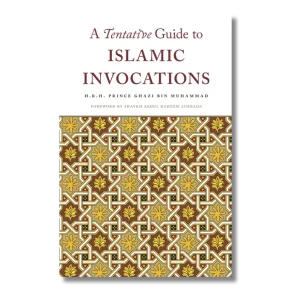
The ‘A Tentative Guide to Islamic Invocations’ is a personal selection of invocations, all of which claim to be from the Prophet Muhammad (SAW) or from his immediate Companions. In other words, everything in this collection is a transmitted (ma’thur) invocation. Apart from a single narration (which is traceable to the Tabi‘ al-Tabi‘in Imam Sufyan al-Thawri [97–161 ah/716–778 ce] and who arguably would not have related it without a now-lost chain of transmission to the Prophet (SAW)), there are no non-transmitted invocations here from any of the great figures of Islamic history and spirituality after the Companions of the Prophet (SAW).
• Pages 196
• Binding Softback
The ‘A Tentative Guide to Islamic Invocations’ is a personal selection of invocations, all of which claim to be from the Prophet Muhammad (SAW) or from his immediate Companions. In other words, everything in this collection is a transmitted (ma’thur) invocation. Apart from a single narration (which is traceable to the Tabi‘ al-Tabi‘in Imam Sufyan al-Thawri [97–161 ah/716–778 ce] and who arguably would not have related it without a now-lost chain of transmission to the Prophet (SAW)), there are no non-transmitted invocations here from any of the great figures of Islamic history and spirituality after the Companions of the Prophet (SAW).

• Publisher Learning Roots
• Pages 28
• Binding Board book
Grow your child’s eman through their everyday natural experiences. This book celebrates the gifts of the senses, limbs and heart as blessings from the All-Loving. The charming, rhyming text features familiar everyday activities in the lives of children. Woven together with cute illustrations, this book delivers a delightful experience your little one will want to return to time and time again. This book includes: A repeated theme on every page that celebrates Allah’s kindness. Captivating illustrations featuring boys and girls from different cultures all enjoying Allah’s kindness. Relatable actions and references from the everyday lives of children, allowing for healthy conversations while reading. Flowing and rhyming text that’s fun to read and easy to understand. Thick and study pages, making this a durable resource designed to be enjoyed again and again. This book makes for a great addition to any young Muslim’s bookshelf, or a wonderful gift for friends and family.
• Pages 28
• Binding Board book
Grow your child’s eman through their everyday natural experiences. This book celebrates the gifts of the senses, limbs and heart as blessings from the All-Loving. The charming, rhyming text features familiar everyday activities in the lives of children. Woven together with cute illustrations, this book delivers a delightful experience your little one will want to return to time and time again. This book includes: A repeated theme on every page that celebrates Allah’s kindness. Captivating illustrations featuring boys and girls from different cultures all enjoying Allah’s kindness. Relatable actions and references from the everyday lives of children, allowing for healthy conversations while reading. Flowing and rhyming text that’s fun to read and easy to understand. Thick and study pages, making this a durable resource designed to be enjoyed again and again. This book makes for a great addition to any young Muslim’s bookshelf, or a wonderful gift for friends and family.

• Publisher Turath Publishing
• Pages 534
• Binding Hardback
Mufti Taqi Usmani's 'Uloom ul Quran' is a comprehensive treatise on the subject of Quranic Sciences. Now accessible to the English-speaking world. Also contains answers to the Orientalists' criticism.
• Pages 534
• Binding Hardback
Mufti Taqi Usmani's 'Uloom ul Quran' is a comprehensive treatise on the subject of Quranic Sciences. Now accessible to the English-speaking world. Also contains answers to the Orientalists' criticism.

• Publisher Goodword Books
• Pages 132
• Binding Hardback
Bedtime Quran Stories is a collection of more than 20 Quran stories to read, love and cherish. The easy-to-read text and bright, full-colour illustrations on every page make this book a perfect way to introduce little ones to the stories, prayers and teachings of the Quran. T e simple, short and beautifully narrated stories highlight key aspects of the Quran— love, humility, obedience, patience and trust. Full of faith, teachings and fun, Bedtime Quran Stories is a wonderful gif for any child.

• Publisher Goodword Books
• Pages 132
• Binding Hardback
Children’s Quran Stories is a collection of more than 20 Quran stories to read, love and cherish. The easy-to-read text and bright, full-colour illustrations on every page make this book a perfect way to introduce little ones to the stories, prayers and teachings of the Quran. The simple, short and beautifully narrated stories highlight key aspects of the Quran— love, humility, obedience, patience and trust. Full of faith, teachings and fun, Children’s Quran Stories is a wonderful gift for any child.

• Publisher Imam Ghazali Publishing
• Pages 115
• Binding Paperback
This compilation of two treatises, al-Kashf wa al-Bayān fī mā Yataʿallaq bi al-Nisyān & ʿIlāj al-Nisyān, one from the classical era and one from the 20th century, contain both conceptual discussion and practical advice on how to address the universal issue of overcoming forgetfulness and strengthening memory
• Pages 115
• Binding Paperback
This compilation of two treatises, al-Kashf wa al-Bayān fī mā Yataʿallaq bi al-Nisyān & ʿIlāj al-Nisyān, one from the classical era and one from the 20th century, contain both conceptual discussion and practical advice on how to address the universal issue of overcoming forgetfulness and strengthening memory

• Publisher Bayyinah Publications
• Pages 305
• Binding Softback
The guidance of the Prophet ﷺ reigned supreme in their lives, no matter the personal cost to their health, wealth and even lives. They lived this life, as travellers, seeking a glorious final abode.
• Pages 305
• Binding Softback
The guidance of the Prophet ﷺ reigned supreme in their lives, no matter the personal cost to their health, wealth and even lives. They lived this life, as travellers, seeking a glorious final abode.
• Publisher Red Kufi Publishing
• Pages 606
• Binding paperback
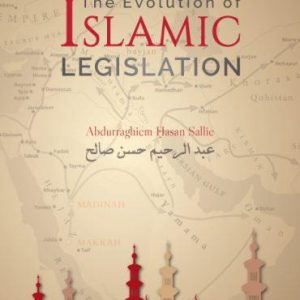
Islam was revealed at a time when the Arabian Peninsula was in a state of social anarchy. The legislation on which Islam is built transformed this hedonistic pagan society into one based on social justice and morality of the highest order, with tauhid (monotheism) as its fundamental principle. This study traces the evolution of Islamic legislation (the shari’ah) through six periods. In this volume, the first three periods are explored, from the first revelation by Allah of the Holy Qur’an to Prophet Muhammad, peace be upon him, until his death. Then the rule under the four rightly guided caliphs – Abu Bakr, Umar, Uthman and Aliy (may Allah be pleased with them). And finally, the period of the scholars among the successors of the companions of the Prophet known as the Tabi-’in. Volume two covers the remaining three periods; that of the four famous imams namely; Abu Hanifah, Malik, Shafi-’iy and Ahmad bin Hambal. They later developed the four major schools of thought in Islam. This era is known as the Golden period of the Islamic legislation since the caliphs granted leeway to those scholars who were qualified to resort to ijtihad (research). An insight is provided for the establishment of the shari’ah and the various factors considered when the legislation was formulated. Verses expounding peace treaties and the fate of prisoners of war are discussed. The rules of war, the protection of women and children and the elderly are discussed in detail. The first period focuses on the divine revelation (the Holy Qur’an), the reasons for its intermittent revelation over a period of nearly 23 years, the Meccan and Medinan periods and its explication by Prophet Muhammad. The second and third periods explore the impact of the rule of the four caliphs on the development of the Islamic Legislation, as well as the introduction of analogical deductions and consensus among the scholars among the Companions, their successors and later scholars. The history of the compilation of the Holy Qur’an into book form and the establishment of the science of sayings and actions of Prophet Muhammad are clearly illustrated. The rise of various sects in Islam and their influence on the shari’ah are further explored as well as the emergence of fabricators of prophetic traditions. Excerpt
• Pages 606
• Binding paperback
Islam was revealed at a time when the Arabian Peninsula was in a state of social anarchy. The legislation on which Islam is built transformed this hedonistic pagan society into one based on social justice and morality of the highest order, with tauhid (monotheism) as its fundamental principle. This study traces the evolution of Islamic legislation (the shari’ah) through six periods. In this volume, the first three periods are explored, from the first revelation by Allah of the Holy Qur’an to Prophet Muhammad, peace be upon him, until his death. Then the rule under the four rightly guided caliphs – Abu Bakr, Umar, Uthman and Aliy (may Allah be pleased with them). And finally, the period of the scholars among the successors of the companions of the Prophet known as the Tabi-’in. Volume two covers the remaining three periods; that of the four famous imams namely; Abu Hanifah, Malik, Shafi-’iy and Ahmad bin Hambal. They later developed the four major schools of thought in Islam. This era is known as the Golden period of the Islamic legislation since the caliphs granted leeway to those scholars who were qualified to resort to ijtihad (research). An insight is provided for the establishment of the shari’ah and the various factors considered when the legislation was formulated. Verses expounding peace treaties and the fate of prisoners of war are discussed. The rules of war, the protection of women and children and the elderly are discussed in detail. The first period focuses on the divine revelation (the Holy Qur’an), the reasons for its intermittent revelation over a period of nearly 23 years, the Meccan and Medinan periods and its explication by Prophet Muhammad. The second and third periods explore the impact of the rule of the four caliphs on the development of the Islamic Legislation, as well as the introduction of analogical deductions and consensus among the scholars among the Companions, their successors and later scholars. The history of the compilation of the Holy Qur’an into book form and the establishment of the science of sayings and actions of Prophet Muhammad are clearly illustrated. The rise of various sects in Islam and their influence on the shari’ah are further explored as well as the emergence of fabricators of prophetic traditions. Excerpt

• Publisher Telltale Texts
• Pages 380
• Binding Papeback
This work is a singular and gripping exploration of the act of 'tawba', a Qur’anic term commonly translated as repentance. In Arabic the term 'tawba' is dynamic, meaning to ‘turn’ or ‘return’. 'At-Tawwab' is one of the Names of God, the Oft-Returning or Ever-Relenting. Tawba is an active constant, an ongoing, compassionate reality that renews every moment we are alive. The process of purification is a process of continuous turning.
• Pages 380
• Binding Papeback
This work is a singular and gripping exploration of the act of 'tawba', a Qur’anic term commonly translated as repentance. In Arabic the term 'tawba' is dynamic, meaning to ‘turn’ or ‘return’. 'At-Tawwab' is one of the Names of God, the Oft-Returning or Ever-Relenting. Tawba is an active constant, an ongoing, compassionate reality that renews every moment we are alive. The process of purification is a process of continuous turning.

• Publisher Turath Publishing
• Pages 308
• Binding Softback
Imam al-Ghazali delves into the core of our predicament by exposing undesirable qualities of the heart, such as arrogance, pride, ostentation, and the pursuit of fame. The importance of ikhlas (sincerity) is the root of what he is alluding to.
• Pages 308
• Binding Softback
Imam al-Ghazali delves into the core of our predicament by exposing undesirable qualities of the heart, such as arrogance, pride, ostentation, and the pursuit of fame. The importance of ikhlas (sincerity) is the root of what he is alluding to.

• Publisher Dar al-Turath al-Islami
• Pages 171
• Binding Paperback
Amin Buxton studied in Hadramawt, Yemen, and has edited and translated several books of the Hadrami scholars. This book explores the lives of several of the descendants of the Prophet Muḥammadﷺ who hail from the valley of Hadramawt. The valley, especially the city of Tarim, has been a seat of sacred knowledge rooted in the Prophetic legacy since the fourth Islamic century. This collection of biographies of some of its luminaries is aimed at instilling love for the family of the Prophet Muḥammadﷺ in the hearts of the readers.
• Pages 171
• Binding Paperback
Amin Buxton studied in Hadramawt, Yemen, and has edited and translated several books of the Hadrami scholars. This book explores the lives of several of the descendants of the Prophet Muḥammadﷺ who hail from the valley of Hadramawt. The valley, especially the city of Tarim, has been a seat of sacred knowledge rooted in the Prophetic legacy since the fourth Islamic century. This collection of biographies of some of its luminaries is aimed at instilling love for the family of the Prophet Muḥammadﷺ in the hearts of the readers.

• Publisher Orion Books
• Pages 192
• Binding Paperback
No religion in the modern world is as feared and misunderstood as Islam. It haunts the popular Western imagination as an extreme faith that promotes authoritarian government, female oppression, civil war and terrorism. Karen Armstrong's short history is a vital corrective to this stereotype. Her book demonstrates clearly how ideas of social justice and compassion are, and have always been, central to the Islamic worldview. 'Islam' begins with the flight of Muhammad and his family from Medina in the seventh century and the subsequent founding of the first mosques. The book explains the central events in the history of this religion, including the origins of the split between Shii' and Sunni Muslims, and the emergence of Sufi mysticism; the spread of Islam throughout north Africa, the Levant and Asia; the shattering effect on the Muslim world of the Crusades; the flowering of imperial Islam in the fourteenth and fifteenth centuries (when the world saw three huge Muslim empires); and the origins and impact of revolutionary Islam. It concludes with an assessment of the challenges facing the religion today.
• Pages 192
• Binding Paperback
No religion in the modern world is as feared and misunderstood as Islam. It haunts the popular Western imagination as an extreme faith that promotes authoritarian government, female oppression, civil war and terrorism. Karen Armstrong's short history is a vital corrective to this stereotype. Her book demonstrates clearly how ideas of social justice and compassion are, and have always been, central to the Islamic worldview. 'Islam' begins with the flight of Muhammad and his family from Medina in the seventh century and the subsequent founding of the first mosques. The book explains the central events in the history of this religion, including the origins of the split between Shii' and Sunni Muslims, and the emergence of Sufi mysticism; the spread of Islam throughout north Africa, the Levant and Asia; the shattering effect on the Muslim world of the Crusades; the flowering of imperial Islam in the fourteenth and fifteenth centuries (when the world saw three huge Muslim empires); and the origins and impact of revolutionary Islam. It concludes with an assessment of the challenges facing the religion today.