You can contact us at +27 76 985 0956 | info@chapter96bookz.co.za
Contact Us
Our Shop
Contact us for all your questions and opinions
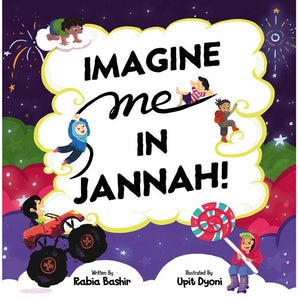
Author: Rabia Bashir | Binding: PaperBack | ISBN: 9781913677084
Isbn: 9781944904104
Author: Imam Abu 'Abd al-Rahman al-Sulami
Publisher: Islamosaic
Infamies of the Soul and Their Treatments ('Uyub al-nafs wa adwiyatuha) was written by the 10th-century scholar Imam Abu 'Abd al-Rahman al-Sulami (325–412 AH/937–1021 CE). It is a foundational Islamic text on self-purification, outlining sixty-nine spiritual ailments and their remedies. The modern English translation is by Musa Furber.
Prophet Adam: Inspiring Quran Stories to Thank Allah for His Blessings is a beautifully illustrated board book that introduces young children to the story of Prophet Adam (AS), the first human and prophet in Islam. Through simple and engaging storyte
Prophet Ayyub: Inspiring Quran Stories to Thank Allah for His Blessings" is a beautifully illustrated board book that introduces young children to the inspiring story of Prophet Ayyub (AS), known for his extraordinary patience and faith during times
Prophet Dawud: Inspiring Quran Stories to Thank Allah for His Blessings is a beautifully illustrated board book that introduces young children to the remarkable story of Prophet Dawud (AS), known for his wisdom, courage, and gratitude to Allah. Throu
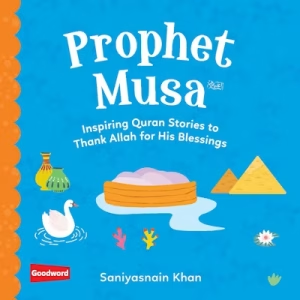
Prophet Musa: Inspiring Quran Stories to Thank Allah for His Blessings" is a beautifully illustrated board book that introduces young children to the powerful story of Prophet Musa (AS), a courageous and faithful messenger of Allah. Through simple an
Prophet Nuh: Inspiring Quran Stories to Thank Allah for His Blessings is a beautifully illustrated board book that introduces young children to the inspiring story of Prophet Nuh (AS), who taught the importance of faith, patience, and obedience to Al
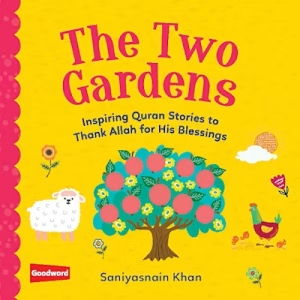
The Two Gardens: Inspiring Quran Stories to Thank Allah for His Blessings is a beautifully illustrated board book that introduces young children to the meaningful Quranic story of the Two Gardens. Through simple and engaging language, children learn
ISBN: 978-9960-740-799
Binding: Hardcover
Pages: 904
Publisher: Darus Salaam Publications
Interpretation of the Meanings of the Noble Quran is a Qur’an translation and commentary reference work by Dr. Muhsin Khan, presenting the Arabic Qur’anic text alongside clear modern English interpretation. This single-volume edition combines translation, concise tafsir, and authentic Hadith to support accurate understanding and study. It is designed for readers seeking clarity, reliability, and scholarly depth in one comprehensive resource.
Arabic Qur’anic text with clear modern English interpretation
A summarized tafsir drawing from At-Tabari, Al-Qurtubi, and Ibn Kathir
Relevant commentary supported by authentic Hadith from Sahih al-Bukhari
Concise explanations that aid understanding without overwhelming detail
A practical study reference suitable for personal reading and teaching
About the Translator
Dr. Muhammad Muhsin Khan (1927–2021) was a respected contemporary Islamic scholar best known for his authoritative English translations of the Qur’an and Sahih al-Bukhari. Working alongside Dr. Muhammad Taqi-ud-Din al-Hilali, his translations are widely recognized for their accuracy, clarity, and adherence to authentic Islamic sources.
Islam: The Freedom to Serve by Sheikh Nazim focuses on the spiritual journey of the self towards true servanthood to Allah, contrasting this with the modern world's pursuit of ego-driven desires and disconnection. The book addresses the challenges people face in bearing burdens, bearing with themselves, and finding reality in a world where many have "lost their will".
Isbn: 9789671833674
Author: Syed Muhammad Naquib al-Attas
Publisher: Pelita Zihin SDN, BHD
Islam: The Covenants Fulfilled by renowned Malay scholar Syed Muhammad Naquib al-Attas presents a profound metaphysical and theological examination of Islam as the completion of divine, primordial covenants. The work explores the promise between God and humanity (the Children of Adam) alongside the covenant of the Prophets (Noah, Abraham, Moses, Jesus) to support the final Revelation, arguing that Prophet Muhammad solidified these by integrating earlier divine wisdom into the universal religion of Islam.
The relationship between Islam and Blackness is complex and multifaceted, encompassing both theological ideals of racial equality and historical and contemporary realities of anti-Black racism within Muslim communities. This connection has a rich history, particularly within Africa and the African diaspora.
Islamic texts and teachings on equality
Islamic scripture and the teachings of Prophet Muhammad emphasize racial equality and the unity of all humanity.
The Quran: The verse 49:13 reminds humanity that God created different nations and tribes "so that you may know one another, not despise one another". It states that the most honored person in God's sight is the most righteous.
The Prophet's Farewell Sermon: Prophet Muhammad explicitly stated that no Arab has superiority over a non-Arab, nor a white person over a black person, except by piety.
Early Muslim community: The Prophet's community included prominent Black figures who were highly respected, such as Bilal ibn Rabah, an Ethiopian former slave and one of the first converts to Islam. He was chosen to be the first muezzin (caller to prayer), a position of great honor.
Black history within Islam
Black people have been part of the Muslim world since its inception.
Early Islamic history: Some of the earliest followers of the Prophet Muhammad sought refuge in the Christian kingdom of Aksum (modern-day Ethiopia) to escape persecution in Mecca.
Islam in Africa: Islam has been present on the African continent since the 7th century and is the predominant religion in North Africa, the Sahel, and West Africa. It was spread peacefully through trade and the work of missionaries, and led to the formation of powerful Islamic empires like the Mali and Songhai.
Islam in America: Historians estimate that up to 30% of the enslaved people brought to the Americas were Muslim. Many of these African Muslims, like Omar ibn Said and Bilali Muhammad, left written accounts documenting their faith and resistance.
Challenges with anti-Blackness in Muslim societies
While Islamic theology is egalitarian, a history of anti-Black racism exists in some Muslim communities.
Historical context: Some scholars note that while early Arabian society judged status by tribe rather than skin color, the expansion of the Islamic world led to the adoption of racial hierarchies and stereotypes from Greco-Roman and Persian cultures. This sometimes entangled the concept of Blackness with enslavement in certain regions.
Debate on textual interpretation: Scholars like Jonathan A.C. Brown have addressed claims that anti-Black racism is inherent in Islamic scripture and tradition. Brown argues that this anti-Blackness is not essential to the faith but was incidental, arising from specific historical and cultural contexts.
Contemporary issues: Many Black Muslims experience racism within Muslim communities today. Racism and white-centric norms can be present in mosques and other Islamic spaces. Black Muslim women, in particular, may face overlapping biases related to racism, Islamophobia, and sexism.
Black Muslim identity in America
In the 20th century, a uniquely Black Muslim identity reemerged in the United States, often linked to movements for social justice.
African-American Muslim movements:
Moorish Science Temple of America: Founded in 1913, Noble Drew Ali taught that Black people were of Moorish origin and that Islam was their true faith.
Nation of Islam (NOI): Founded in the 1930s, the NOI combined Black nationalism with distinct Islamic practices. Key figures included Malcolm X and Muhammad Ali.
Transition to mainstream Islam: After leaving the NOI, Malcolm X embraced Sunni Islam after his pilgrimage to Mecca in 1964 and advocated for universal racial equality based on mainstream Islamic teachings. This was a pivotal moment that led many African-American Muslims toward mainstream Sunni Islam.
Invisibility and intersectionality: Despite representing a significant portion of the U.S. Muslim population (about 20%), Black Muslims can be made to feel invisible. Their experiences are shaped by the intersection of systemic racism faced by all Black Americans and the Islamophobia experienced by many Muslims.
Isbn: 9789671833643
Author: Syed Muhammad Naquib al-Attas
Publisher: Pelita Zihin SDN, BHD
Islam and Secularism by Syed Muhammad Naquib al-Attas is a foundational work of contemporary Islamic thought, written 40 years ago to address the "Muslim dilemma" caused by the encroachment of Western secularization. The book argues for the "dewesternization of knowledge" and the "Islamization of contemporary knowledge" as the primary, essential solutions. It explores key concepts like \(d\={i}n\) (religion), \(adl\) (justice), \(hikmah\) (wisdom), and \(adab\) (ethics), focusing on the need to restructure Islamic education to combat secular, humanist influences and uphold the true Islamic worldview.
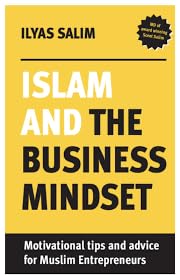
Author: Ilyas Salim (with Dr. Abia Afsar-Siddiqui) | Binding: Paperback | ISBN: 9781842002070
In addition to a thorough history of the interactions between Christians and Muslims since the Crusades, Islam and the West: A Light on the Horizon gives an extensive analysis of the relationship between Christianity and Western Culture and the Muslim World today, including current issues and insights into what is needed for peaceful cooperation.