You can contact us at +27 76 985 0956 | info@chapter96bookz.co.za
Contact Us
Our Shop
Contact us for all your questions and opinions
• ISBN 978-1842001349
•Pages 259
• Binding Softcover
Al-Fawz al-Kab r f U l at-Tafs r The Great Victory, on Qur nic Hermeneutics is a manual of the principles and subtleties of Qur nic tafs r. In it the author outlines the five fundamental sciences that the Qur n contains: the science of judgements (a k m), reminding others of the Favours of Allah, the Days of Allah and the Life after Death, and giving particular attention to the science of polemics. He also reviews the other sciences of tafs r such as the circumstances of revelation (asb b an-nuz l), abrogating and abrogated y t (an-n sikh wa l-mans kh) and the unusual words and phrases of the Qur n (ghar ib al-Qur n), before concluding the book by looking at the extraordinary and miraculous aspects of the Noble Book, and a final chapter on the meanings of the letters of the Arabic alphabet.
This Dictionary of Modern Written Arabic (fourth edition) has been enlarged and amended with 13,000 new entries. It is the only authorized paperback edition of the famous Hans Wehr Arabic-English Dictionary, edited by J. Milton Cowan. This new edition has thousands of new entries include numerous additions and corrections to the material and presents the results in a single handsome volume.The author provides a useful introduction in which he discusses, clearly and precisely, the present state of the Arabic language. He points out the situations in which written and spoken varieties of Arabic are used, and remarks on the forces that influenced the development of the lexicon of Modern Arabic. He discusses both the purist movement with its normative tradition, and what might be called the laissez-faire actual usage of writers and journalists under the influence of Western modes of expression, of their everyday colloquial, or both. He then moves on to the problem of local terminology, especially for public institutions, offices, administrative matters, titles, and foods. Although such terms are included for most of the Arab countries, the list is not complete, as indeed the author recognizes (viii); readers of Arabic material characterized by a distinct regional coloring are advised to refer to dialect dictionaries and glossaries.
• ISBN 978-0946621866
•Pages 256
• Binding Softcover
The importance of language and its use in legal reasoning in Islamic law is explored in this legal text. Covering such topics as linguistic principles and legal rulings, the clarity and ambiguity of linguistic terms, the general and specific qualities of words, and the ambiguity and clarity of selected terms, this linguistic study places the discussion of Islamic language and law into its context, introducing fundamental principles of Islamic jurisprudence and its development, branches, importance, and relationship with the other Islamic sciences. Readers will learn about the tools developed by Islamic scholars in making the law, the methods used in Islamic legislation, and the sources of Islamic law.
Recently viewed items
• ISBN 978-1800119802
•Pages 457
• Binding Hardcover
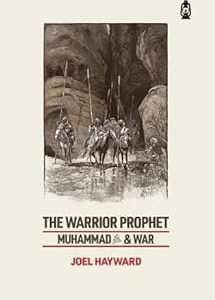
Most Islamic biographies deal with Muhammad's use of warfare by using an understandable but insufficient logic: that the Messenger of Allah was the ideal and paradigmatic human, so he must have been an ideal and paradigmatic military commander. Wanting Muhammad's behavior to conform to very modern ethical concepts and widespread (but not necessarily accurate) beliefs about the nature and conduct of war, the writers have created a narrative which, in significant ways, departs from the account clearly and consistently revealed in the earliest extant Arabic sources. Professor Joel Hayward sees this as an unhelpful explanatory tendency and believes that the modern depiction of the Prophet's relationship with warfare — which presents him as being rather antipathetic to war, indeed as virtually a pacifist who only fought reluctantly in self-defense — cannot actually be sustained by a thorough and even-handed analysis of the early Islamic sources. A committed Muslim himself, Hayward concludes that, within a competitive and conflictual environment with ubiquitous threats, warfare was necessary to make real the bold new world that Muhammad foresaw. Through original, meticulously researched and rigorous analysis, Hayward covers all the raids and campaigns and demonstrates that Muhammad correctly understood the necessity and utility of force and duly developed into an intuitive, effective and victorious military practitioner who developed and enforced a strict moral code so as to attain his goals whilst safeguarding the innocent. This engaging, accessible yet deeply scholarly and definitive book makes a major contribution to strategic and military analysis and to the Prophet's biography.
Spirituality in Islam has always been strongly connected to the descendants of the Blessed Prophet ﷺ . This book tells the story of a major branch of Ahl al Bayt or House of Prophecy, the Ba‘Alawis of Southern Yemen. Their tradition of scholarship and sanctity has produced countless great men of God over the centuries and still does. Their biographies clearly demonstrate their pattern of spiritual achievement, which is of the utmost importance to every contemporary seeker of nearness to the Divine Presence.
The author: Dr. Mostafa al-Badawi is an Egyptian psychiatrist, scholar of Islamic sciences, and translator of Islamic texts. Among the texts he has translated are the ten books of Imam Abd Allah al-Haddad, Key to the Garden by Habib Ahmad Mashhur al-Haddad, and The Degrees of the Soul by Shaykh al‑Shabrawi. His own works include Man and the Universe, Sufi Sage of Arabia, A Higher Reality, Twilight of a World, Ancient Prophets of Arabia, Spiritual Significance in Islamic Architecture, and Day of Decision: The Battle of Badr.