You can contact us at +27 76 985 0956 | info@chapter96bookz.co.za

Contact Us
Our Shop
Contact us for all your questions and opinions


• Publisher Wordsmith Press
• ISBN 978-0860378730
•Pages 512
• Binding Softcover
Following Dr Yasir Qadhi’s ground-breaking video lecture series on the sīrah of the Prophet Muhammad , this book is an equally impactful written adaptation. It provides a refreshing insight into the life of the Final Messenger and contextualises the sīrah in the modern-day context. It is not just a chronological account but also offers beneficial and actionable lessons, relating the biography of the Prophet (PBUH) to our daily lives.

This beautifully illustrated board book, introduces to the children the greatest stories from the Quran and lessons to be learnt from them.
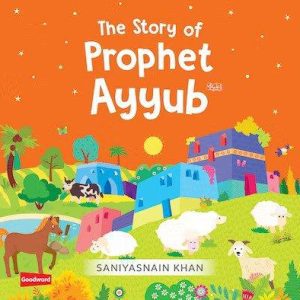
•Publisher: Goodword Books
•ISBN: 9789351791218
•Pages: 22
•Binding: Hardcover
This delightful board book is a perfect gift for little children. The Quran story of Prophet Ayyub comes with charming illustrations and engaging text. The story has a moral in the end.
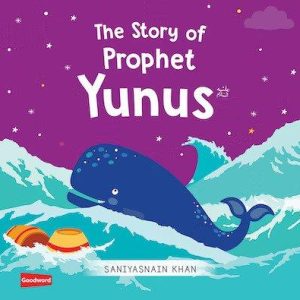
•Publisher: Goodword Books
•ISBN: 9788178988955
•Pages: 22
•Binding: Hardcover
This beautifully illustrated board book, introduces to the children the greatest stories from the Quran and lessons to be learnt from them.

- Publisher: Sunni Publications
- Translators: S Caraballo & S. Abdul Aziz
- ISBN: 9789079294282
- Pages: 160
- Binding: Paperback

"What is happiness? What is not happiness? How can one lead a truly happy life? What are the differences between happiness, joy, gladness, contentment and pleasure?
In this concise and easy-to-read book, noted philosopher and Islamic scholar, Prince Ghazi of Jordan, reviews the classical philosophical and religious answers to these questions and then shows Islam’s perspective on the issue based on the Qur’an and saying of the Prophet Muhammad (SAW.) The answer is a surprising one to which everyone can relate."

• Publisher Islamosaic
• ISBN 978-0985884024
•Pages 182
• Binding Softcover
A translation of Abu Shuja' al-Asfahani’s introduction to classical Islamic law, Matn al-Ghayat wa al-Taqrib. This enduring classic covers the full range of basic topics within the Shafi'i school of law. It includes the full Arabic text and notes to point out where later Shafi'i jurists have differed from the author, Imam al-Nawawi's preferences, and minor clarifications and explanations.
• ISBN 978-0985884024
•Pages 182
• Binding Softcover
A translation of Abu Shuja' al-Asfahani’s introduction to classical Islamic law, Matn al-Ghayat wa al-Taqrib. This enduring classic covers the full range of basic topics within the Shafi'i school of law. It includes the full Arabic text and notes to point out where later Shafi'i jurists have differed from the author, Imam al-Nawawi's preferences, and minor clarifications and explanations.
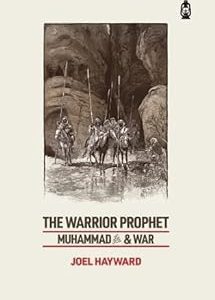
• Publisher Claritas Books
• ISBN 978-1800119802
•Pages 457
• Binding Hardcover
Most Islamic biographies deal with Muhammad's use of warfare by using an understandable but insufficient logic: that the Messenger of Allah was the ideal and paradigmatic human, so he must have been an ideal and paradigmatic military commander. Wanting Muhammad's behavior to conform to very modern ethical concepts and widespread (but not necessarily accurate) beliefs about the nature and conduct of war, the writers have created a narrative which, in significant ways, departs from the account clearly and consistently revealed in the earliest extant Arabic sources. Professor Joel Hayward sees this as an unhelpful explanatory tendency and believes that the modern depiction of the Prophet's relationship with warfare — which presents him as being rather antipathetic to war, indeed as virtually a pacifist who only fought reluctantly in self-defense — cannot actually be sustained by a thorough and even-handed analysis of the early Islamic sources. A committed Muslim himself, Hayward concludes that, within a competitive and conflictual environment with ubiquitous threats, warfare was necessary to make real the bold new world that Muhammad foresaw. Through original, meticulously researched and rigorous analysis, Hayward covers all the raids and campaigns and demonstrates that Muhammad correctly understood the necessity and utility of force and duly developed into an intuitive, effective and victorious military practitioner who developed and enforced a strict moral code so as to attain his goals whilst safeguarding the innocent. This engaging, accessible yet deeply scholarly and definitive book makes a major contribution to strategic and military analysis and to the Prophet's biography.
• ISBN 978-1800119802
•Pages 457
• Binding Hardcover
Most Islamic biographies deal with Muhammad's use of warfare by using an understandable but insufficient logic: that the Messenger of Allah was the ideal and paradigmatic human, so he must have been an ideal and paradigmatic military commander. Wanting Muhammad's behavior to conform to very modern ethical concepts and widespread (but not necessarily accurate) beliefs about the nature and conduct of war, the writers have created a narrative which, in significant ways, departs from the account clearly and consistently revealed in the earliest extant Arabic sources. Professor Joel Hayward sees this as an unhelpful explanatory tendency and believes that the modern depiction of the Prophet's relationship with warfare — which presents him as being rather antipathetic to war, indeed as virtually a pacifist who only fought reluctantly in self-defense — cannot actually be sustained by a thorough and even-handed analysis of the early Islamic sources. A committed Muslim himself, Hayward concludes that, within a competitive and conflictual environment with ubiquitous threats, warfare was necessary to make real the bold new world that Muhammad foresaw. Through original, meticulously researched and rigorous analysis, Hayward covers all the raids and campaigns and demonstrates that Muhammad correctly understood the necessity and utility of force and duly developed into an intuitive, effective and victorious military practitioner who developed and enforced a strict moral code so as to attain his goals whilst safeguarding the innocent. This engaging, accessible yet deeply scholarly and definitive book makes a major contribution to strategic and military analysis and to the Prophet's biography.

"Meet the Only Lift-the-Flap Book that’s Designed for Muslim Babies
Have you ever wished that there was a fun and engaging book that also has a beneficial outcome for your child?
With The Way to Jannah, we can ensure you that you will have a great time reading this book to your children as well as it being Isalmically educational. Here’s how:
It’s a lift-the-flap book that's engages your child with curiosity and physical play.
The Way to Jannah contains short duas that have a spiritual benefit as your child will hear and get familiar with common words of remembrance such as 'alhamdulillah' and 'subhanAllah'.
It’s so cute! Your child will love to pick up this book as it is colourful illustrations will delight their eyes!
The book is written in an engaging story format so it's easy to follow and every page is intriguing making your child want to continuously turn the pages.
The Way to Jannah is a board bookthat's very durable.
It is also small so it is easy to handle and for little hands to grip.
The way to Jannah has proven to be very popular with little children, so much so that it has been translated into 4 different languages! It is one of our best selling books and has been delivered to many countries across the globe."

•Publisher: Kube Publishing
•ISBN: '9780890377443
•Pages:
•Binding: Hardcover
Tittle-tattle Talia is a story about a young girl who can not resist a juicy story. She is always talking about other people and she loves the attention she gets from those who listen to her tales. Despite warnings to stop, she doesn't see why a bit of fun is such a problem, but wait...where have all her friends gone?

Towards a True Spiritual Connection: Wisdom from the Teachings of Habib ‘Umar
Author: Muhammad bin ‘Abdullah bin ‘Ali al-Aydarus
Translator: Abdullah Salih
Binding: Paperback
95 pages
ISBN: 9781952306679
Publisher: Imam Ghazali Publishing
This text is a concise discussion of matters affecting the relationship between a student and a spiritual teacher. Adapted from the teachings of Habib 'Umar bin Hafiz, it covers both conceptual and practical knowledge necessary to benefit from such a relationship, with extended discussion of both outward and inward etiquettes of the student towards the teacher.
The author writes in his introduction:
"I hope [this text] would enable us to recognise the right of being in the company of those whose condition inspires us and whose words guide us towards Allah ﷻ so that we too could hold on to divine attributes, be imbued with prophetic characteristics, and imbibe the qualities of the true servants."
Excerpts from the Qur'an are interspersed throughout the text, with extended commentary on those verses most relevant to the relationship between teachers and students. The text also includes an overview of the history of spiritual teachers from the time of the Prophet ﷺ down to the present day, the role of such relationships in da'wah, the responsibilities and potential pitfalls of establishing such a connection, and other related issues.
About Habib 'Umar bin Hafiz
Habib 'Umar bin Hafiz is a descendant of the Prophet Muhammad ﷺ, tracing his lineage back through a well-known family in the Hadhramaut region of Yemen, where his ancestors have been influential scholars and spiritual guides for centuries. He was born in 1963 in Tarim, a historic center of Islamic learning, and faced persecution during the communist regime in South Yemen, but continued his religious studies in secret. After the regime fell, he founded Dar al-Mustafa in 1993, which has since become a major center for Islamic scholarship, attracting students from all over the world. Habib ‘Umar is recognized for his deep spiritual insight and dedication to spreading Islam’s message through teaching, outreach, and community service. His influence extends globally through his lectures, writings, and extensive travel, promoting the values of mercy, humility, and unity.


• Publisher Kube Publishing
• ISBN 978-1915357045
•Pages 118
• Binding Hardcover
Trials and An Islamic Perspective offers an insight into how to deal with life’s challenges with grace, positivity and strength. Rooted in the Qur’an and Sunnah, this book seeks * Place the life of this world into perspective. * Encourage the growth that can be achieved in the midst of difficulties. * Soothe the heart through practical advice and selected du‘as.
• ISBN 978-1915357045
•Pages 118
• Binding Hardcover
Trials and An Islamic Perspective offers an insight into how to deal with life’s challenges with grace, positivity and strength. Rooted in the Qur’an and Sunnah, this book seeks * Place the life of this world into perspective. * Encourage the growth that can be achieved in the midst of difficulties. * Soothe the heart through practical advice and selected du‘as.

Turning Back to Allah is an exciting story for children about a young Muslim boy who learns the importance of sincere du’a and reliance on Allah by turning back to Him at all times and asking for help and forgiveness.

Ulum Al-Qur’an: An Introduction to the Sciences of the Quran – Ahmad Von Denffer
This classic and popular introduction to the sciences developed to interpret and understand Islam's holy book is ideal for all serious students of the Koran. Precise, yet comprehensive, it covers the traditional disciplines, including the meaning and contexts of revelation, the history and transmission of the text, and exegesis, as well as more contemporary topics like the recording of the Koran, the history of Orientalist approaches, and a survey of translations. It ends with a guide for the correct recitation of, and etiquette toward, the Koran.
Chapter 1: The Qur'an and Revelation
Chapter 2: Transmission of the Qur'anic Revelation
Chapter 3: The Qur'an in Manuscript and Print
Chapter 4: Form, Language and Style
Chapter 5: Understanding the Text
Chapter 6: Interpreting the Text
Chapter 7: Some Related Issues
Chapter 8: Reading and Studying the Qur'an
Ahmad Von Denffer was born in Germany in 1949. He studied Islamics and Social Anthropology at the Universty of Mainz, where he also attended additional courses in the Department of Missiology. His special interests include Christian-Muslim relations. He has made a number of contributions to scholarly journals and has several publications to his credit. He joined the Islamic Foundation as Research Fellow in 1978 and is presently working with the Islamic Centre, Munich.

Umar Farooq(ra), the second Caliph of Islam, ruled for about ten years over a total area of 2,251,030 square miles. His rule was exemplary, every decision and action of his being guided by the word of Allah, as enshrined in the Quran. It is difficult to imagine that any ruler who had a huge empire, like Umar Farooq's(ra), would live like a simple, common man. But that is exactly what he did. He wore clothes with many patches, slept on the floor, ate plain food and travelled to foreign lands with just one servant and a camel. Umar Farooq (ra) had a strong sense of duty and justice. Throughout his rule, everyone was treated equally and with justice, whether he was a Muslim or a non-Muslim. He lived in the love and fear of Allah. In the history of the world, there was and still is no other ruler like him: he was unique.